Greening the grid: How startups and homeowners can accelerate the renewable revolution
19 November 2024
 8 minute read


The UK plans to reach net-zero emissions by 2050. Continued investment in renewable power generation and grid infrastructure will play a key role in hitting that target, but part of the solution lies closer to home. The UK’s 28 million residential homes account for nearly one-fifth of total UK carbon emissions, with the bulk driven by heating and cooling of both space and water. And the UK is an outlier in Europe. According to the most recently available data, roughly 74% of homes in England & Wales rely on mains gas to heat their homes – compared to less than 50% in France and Germany – instead of devices like heat pumps that run on electricity, and which can therefore be sourced from low-carbon renewable energy.
To make homes part of the net-zero journey, there is a need for increased adoption of renewable home technologies. Hardware like solar panels, heat pumps, electric vehicles (EVs) and home chargers, along with software that can help homeowners better manage and optimise their supply and demand, could play an important role in the UK’s energy transition. While early adopters have started to invest in this technology to begin decarbonising their homes, the penetration rate of green home tech is low compared to Europe. Affordability remains a big barrier – much of the tech is still too expensive in terms of the upfront cost – as do structural factors like the UK’s energy mix and relative tax burden on electricity versus gas. It can take years for a household to breakeven as a result of energy bill savings from a switch to greener home tech. Convenience is also an obstacle: to truly optimise potential savings from green home tech, individuals and families have to adopt (often inconvenient) behavioural changes, like running appliances or charging vehicles at off-peak times.
While policy and regulation will play a role in addressing these barriers, there is a significant opportunity for startups to build and scale technology to make the generation, use, and management of renewable energy in the home cheaper, simpler, and more flexible.
The grid’s growing pains
The shift to renewable energy brings its own set of challenges. Wind and solar power are intermittent by nature (the sun does not always shine, wind picks up and drops off throughout the day), and their supply does not naturally align with periods of peak energy demand. This inconsistency puts strain on the current, centralised grid system, which was originally built for controllable energy sources like coal and natural gas. The grid requires modernisation to balance supply and demand to avoid power outages and blackouts, and handle the increasing demands from increased uptake of EVs and the data centres powering the latest wave of AI.
More efficient storage solutions will play a major role in balancing this supply and demand mismatch. Significant investment and scientific resource has already gone into developing solutions like large-scale batteries and pumped-storage hydropower, which store renewable power so that it can be released at times of demand. But there remains a long journey ahead to deploy these technologies effectively within a more decentralised grid.
The home’s role in a sustainable future
Alongside investment in storage solutions, homes, and the people who live in them, can play an important and complementary role in balancing the grid – and thus reducing the barriers to widespread renewable adoption.
While a household is connected to the grid (as opposed to being completely self-powered), its energy consumption can only be as “green” as the mix of energy on the grid. However, greater adoption of electricity-powered home devices (such as heat pumps) still makes a big difference in reducing the UK’s reliance on fossil fuels. Gas made up 31% of UK electricity supply in 2023 and renewables accounted for 43% – which is just under the 44% share of renewables in the EU. This means that, on average over the year, a household using electric heating sources used roughly 3x less gas than a gas-heated home (31% vs. 100%).
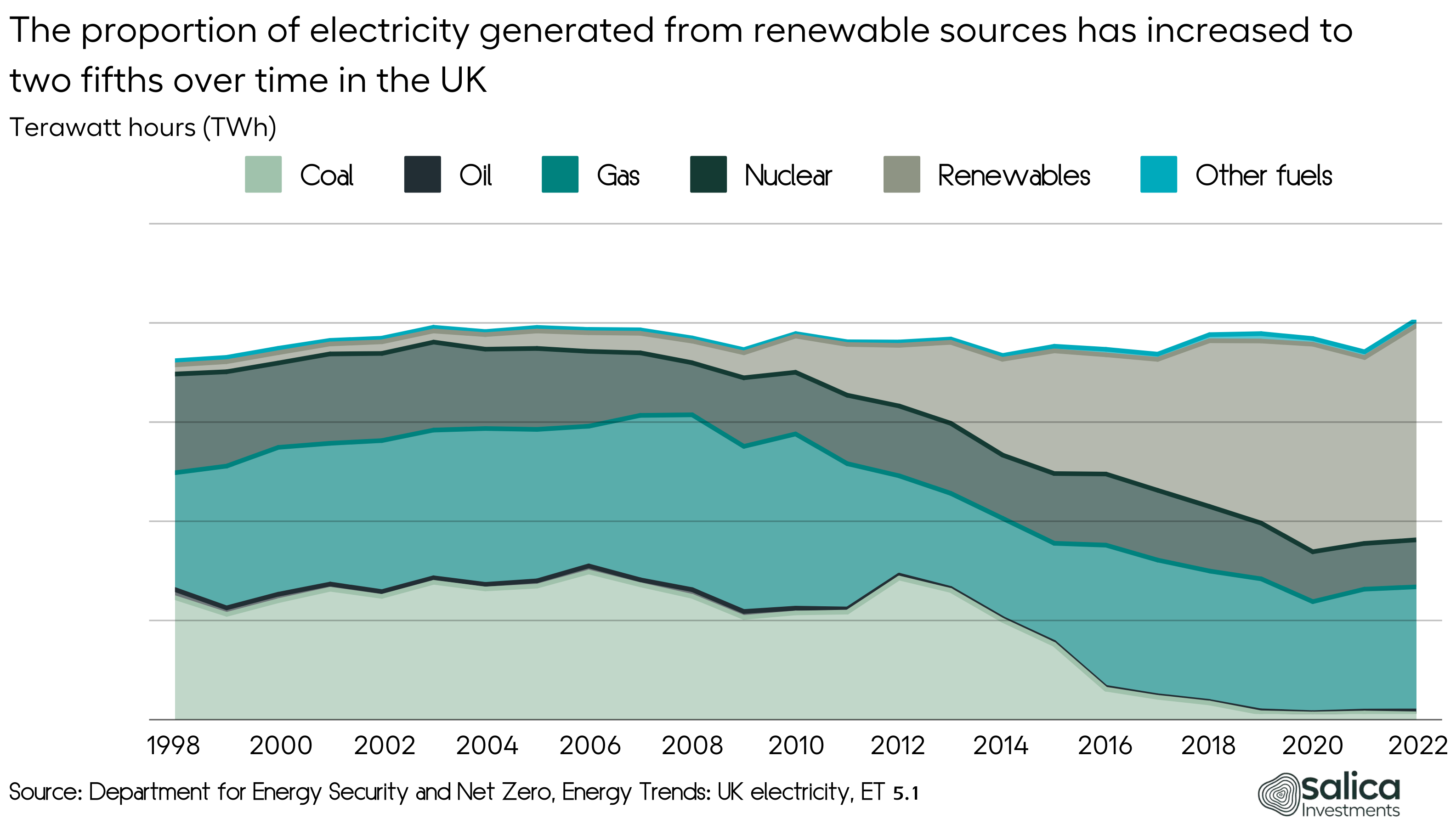
Electric heating systems also allow for flexibility in energy usage. By using flexible utility tariffs and consuming electricity when renewable sources are plentiful while, where possible, releasing supply of clean energy when grid sources are scarce, households could potentially use nearly 100% renewable electricity, save money, and help balance the grid in a similar way to batteries and other storage solutions.
Challenges to household adoption
Despite the potential benefits, most consumers find flexible energy management too complicated and the options too limited or too high cost, hindering adoption at the household level.
In recent years, a number of start ups have emerged to help solve this problem by creating user-friendly software and hardware to automate the process and make green energy consumption simple. Smart home energy management systems (HEMS), for example, allow homeowners to track and control their energy use in real time, adjusting consumption based on the availability of cheaper, renewable energy. Appliances can be powered down when electricity is expensive and ramped up when renewable energy is plentiful, helping balance the grid and lower energy bills.
These solutions go some way towards tackling the “convenience issue”. But to unlock the full savings and grid-balancing potential of HEMS, homes also need more distributed energy resources (DERs) like solar panels, heat pumps, EVs, and home batteries. These technologies generate electricity near the point of use or store it, allowing households to use off-grid power or tap into cheaper grid electricity when it is abundant. This flexibility not only helps balance the grid, but also enables homeowners to reduce costs and even get paid by grid operators for contributing to grid stability. Put simply, households with more DERs can enjoy greater optimisation benefits from using a home energy management system.
Startups focused on monetising flexibility also play an important role, making it possible for households to monetise their green tech investments and breakeven more quickly.
Accelerating adoption
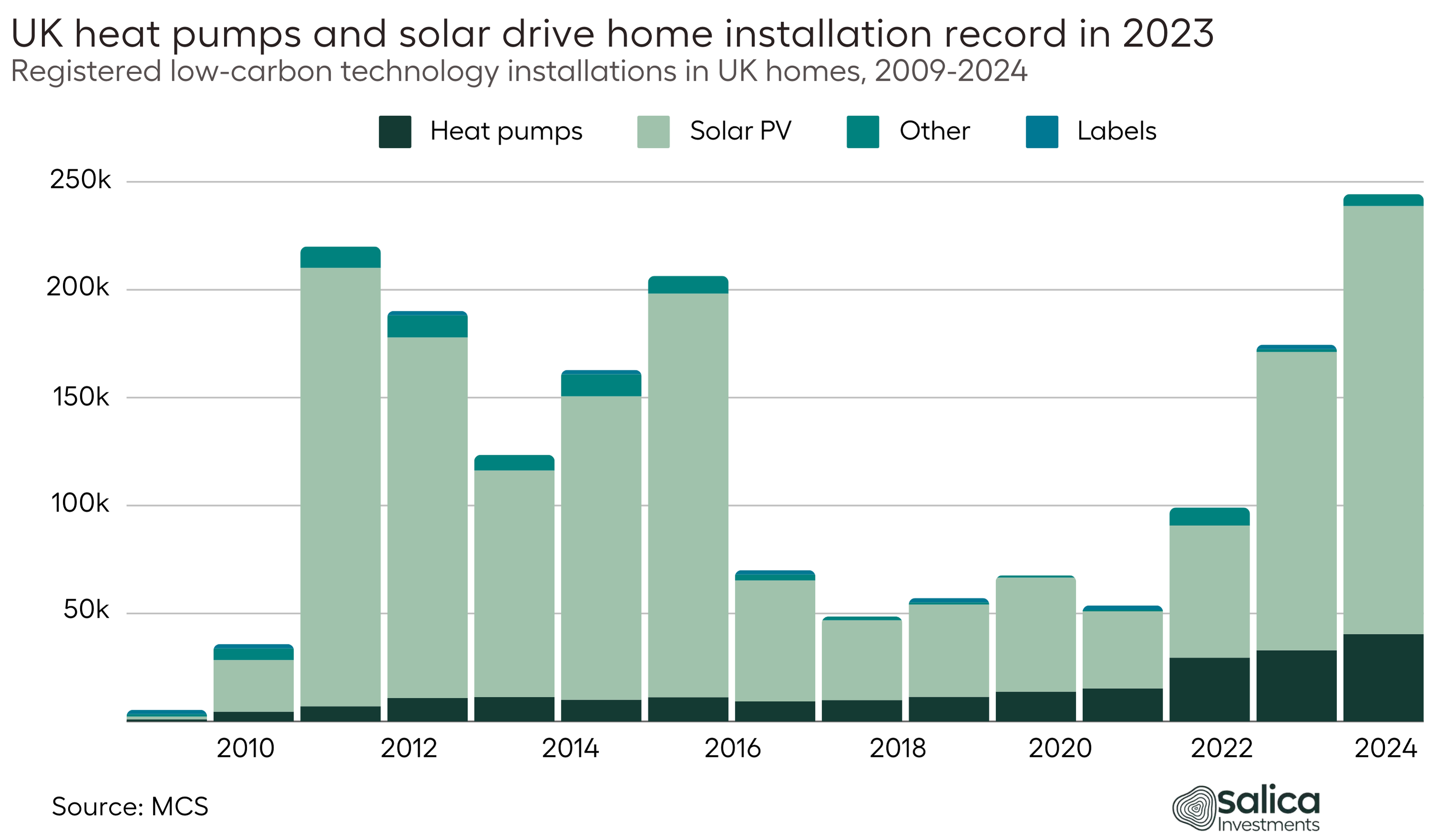
The uptake of DERs is growing rapidly in the UK and, based on European trends, stands to become an enormous market. In 2023, solar panel installations surged 30% – with 190,000 installed in the year, and 1.4m or 5% of UK households in total – and heat pump adoption grew by 20% to 37,000. While the growth is encouraging, the absolute figures point to the whitespace still to address. By comparison, market leader Norway has already installed heat pumps in two-thirds of its households.
Despite the promise, however, the complexities of rollout and commercialisation are significant. According to research, the total number of smart and advanced metres installed by large suppliers fell by 11% in Q2 2024 compared to the previous quarter and 15% in the same quarter the year prior. And while three quarters of homeowners want to make energy efficient-related improvements, the vast majority can’t afford them.
Regulation and policy change will be required to address a large part of this affordability point. There has already been progress on this front, with both the public and private sectors helping to make this transition more attractive.
Through plans launched by prior governments like the £450m Boiler Upgrade Scheme, the UK is attempting to hit a target of 600,000 heat pump installations per year by 2028 (only around 37,000 were installed in 2023). Utilities are also required to play a direct role in improving domestic energy efficiency via the Energy Company Obligation (ECO) scheme, under which energy utility companies over a certain size must deliver upgrades – at their own cost – to properties to improve their energy efficiency, or else face a substantial fine. However, these policies could change under the current Labour government.[1]
The private sector is also stepping up. For example, the green mortgage market, though nascent (making up just 0.4% of total lending in the UK), is growing quickly. Banks, motivated by their own net zero goals, are increasingly offering products that incentivise the uptake of retrofits and other efficiency measures. These products are not only aligned with environmental goals but also make financial sense for banks – some industry players see the potential for greener homes to be stronger credit risks, and, therefore, better business.
But there may also be an interesting role for startups to play in solving this specific part of the challenge, particularly those partnering with banks and other financial institutions to identify innovative funding mechanisms for households to bring down the upfront cost of installing DERS, as well as making it easier to monetise the flexibility these DERS unleash. Business model innovation – for example, partnering with or selling to manufacturers and energy suppliers as well as financial institutions – may prove as critical as technology innovation in empowering UK homeowners to decarbonise at scale.
The road ahead
The UK is on its way to transitioning to a green energy ecosystem, and householders are increasingly onboard with – and a crucial part of – this mission. But to narrow the large gap between willingness and actual adoption of decarbonisation technologies, startups and the private capital backing them can help drive the innovation, scale, and adoption necessary to close it.
If you are working on a software solution in this space, we would love to speak to you.
Market map:

[1] Labour’s manifesto pledged to invest “an extra £6.6bn” of funding to improve energy efficiency in five million homes and includes an aim to achieve a net zero energy grid by 2030, but implementation details are unknown at the time of writing.


