We banished the dreaded ‘gunk’ with our eco-friendly toothbrushes
15 September 2025
 7 minute read


Gyve Safavi and Mark Rushmore, co-founders of Suri, spotted a gap in the market for a sustainable electric toothbrush. It’s now a £24 million business.
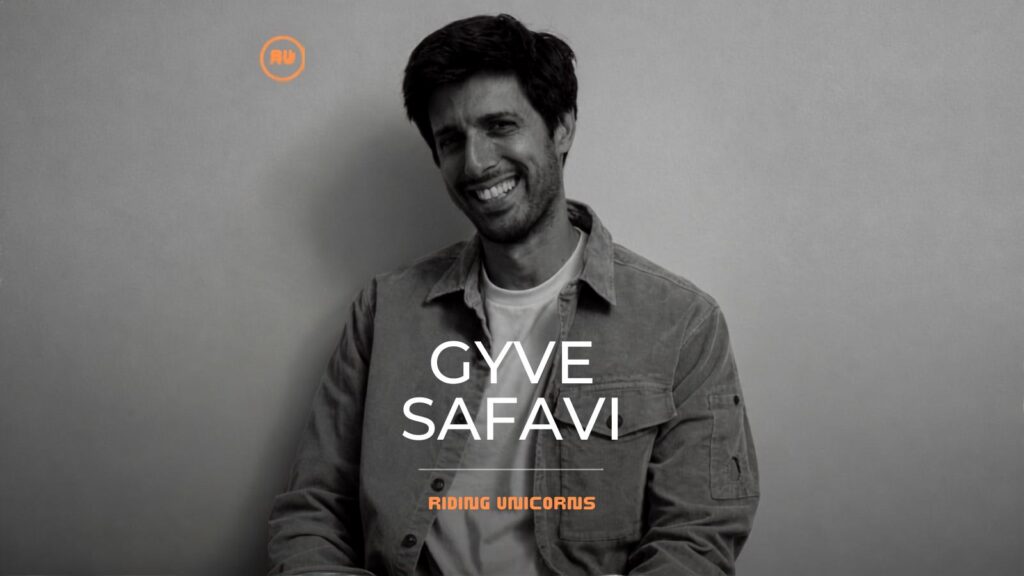
Suri co-founders Gyve Safavi and Mark Rushmore first met on a speedboat in the south of France, with the advertising tycoon Sir Martin Sorrell also on board. The products they went on to develop are now sold in Gwyneth Paltrow’s Goop stores in the US, and fans include the former Apple design chief Sir Jony Ive and the Kardashians.
But this is where the glamour ends, because Suri makes electric toothbrushes.
One of the reasons for the growth in the company’s sales, to £24 million between 2022 and 2024, was that each toothbrush comes with an in-built magnet and a wall mount to stick it to, preventing grim toothbrush gunk from building up around the sink or on the charger.
“No one likes that gunk,” said Safavi, 42.
Early in their careers, he and Rushmore, now 40, both worked for Procter & Gamble, the consumer goods giant that owns the Oral-B toothbrush brand as well as Gillette razors, Pampers nappies and Fairy washing-up liquid. But by the time they got talking on the speedboat, Safavi was working for WPP, the advertising company then run by Sorrell, and Rushmore was running his own brand events company, which he was hoping WPP would buy.
Safavi explained that he also wanted to start his own business — one that did something to tackle the huge amounts of plastic waste generated by health and beauty products.
Then “nothing happened for seven years”, said Rushmore — although the pair stayed in touch. By 2020, however, Rushmore had sold his first business (not to WPP) and Safavi had left his job, with plans to go travelling — until the pandemic put paid to that. And now Safavi’s vision began to take shape.
The friends arranged to meet in a park in London — social distancing rules made that decision for them — so Safavi could show Rushmore his business plan for a more sustainable electric toothbrush that also looked attractive.
“I was desperately looking for somebody to work with me, but I didn’t say it that way, I was trying to play hard to get,” said Safavi. “I was being casual: ‘I’ve done some work … you could take a look at this.’ ”
Rushmore took up the story: “That night I opened the file and it was the most detailed, comprehensive research, with so much thinking behind everything. I could see there really was something that, if we combined our skills, we could take further.”
Safavi’s idea was to make an electric toothbrush out of materials that are more sustainable than plastic. The head of Suri’s brush is made of corn starch and the bristles from castor oil, while the body is made from aluminium. It is designed so that customers can send it back for repairs or recycling. He also thought electric toothbrushes were overloaded with features that people didn’t use, such as Bluetooth.
Over the course of their early product development and testing, including thousands of consumer surveys, Safavi and Rushmore learnt the other things that people didn’t like about their electric toothbrushes, which included having to charge them all the time, the noise and the gunk. A long battery life, a quiet motor and the wall-mount magnet became features of Suri’s brushes and the basis of their marketing campaigns.
But the first hurdles to overcome were big ones: neither of them had any experience of manufacturing and they needed to raise money to develop a toothbrush.
The pair were on video calls for 12 hours a day during lockdown and spoke to a total of 24 manufacturers in Asia using a combination of Zoom, translation apps and WeChat, the Chinese messaging app.
When they explained what they wanted to make, many of the manufacturers laughed, said Safavi. “A lot of them don’t want to take risks in hardware. Efficiency and innovation for a factory is creating what you already create, but faster and better and cheaper — not doing something different with two guys who’ve never done hardware.”
Eventually, one manufacturer in China said yes and Safavi and Rushmore paid for the first prototypes to be built. They got to the point where they had toothbrushes they felt they could show to potential investors, but the models were still a long way from the end product they had in mind and “they were very clunky”, said Safavi.
The pair raised £800,000 from angel investors and the venture capital firm Salica in 2021, and with that they bought their first 5,000 toothbrushes from China, as improvements in their innovation took shape. At the same time, they were sending brushes to reviewers at newspapers and magazines, and advertising on Instagram. The company also won a competition for sustainability companies called the Earth Ad Fund, which gave them £200,000 of advertising space in The Times and The Sunday Times.
When the brushes went on sale in May 2022, they sold out in three days, and the next 5,000 ordered by the co-founders also sold out in a couple of weeks. By then, Suri was part of an Amazon accelerator programme for start-ups, which had given them free office space in the company’s London headquarters in Bishopsgate in the City. “That definitely saved us money, but being in this amazing building also helped us hire some initial talent,” said Rushmore.
The following year, they raised £2 million from Salica again and JamJar, a venture capital firm set up by the founders of Innocent smoothies including Richard Reed, who is on Suri’s board. In 2024 the company raised £6 million from the same investors, plus a few new ones. Rushmore and Safavi still own the biggest share of the company, they said.
Suri is profitable, so they said they would raise money again only to expand faster. The company has 37 staff.
Growth has not been entirely smooth. Early on, 3,000 of the 5,000 brushes that the company had ordered were due to go to the US … when the courier said they couldn’t ship anything with batteries in it. Customers had ordered the brushes up to three months in advance and finding another courier would add six weeks to their wait.
“For 72 hours, that really felt existential,” said Rushmore. “We had just started. If everyone said they wanted a refund, we didn’t have any money — it would put us out of business straight away. We were thinking that having raised all this money, we were about to lose everything.”
They personally emailed every customer whose order was delayed and explained the problem, and luckily most were patient.
“But that taught us how important it was to have better processes in place, and shortly after that incident we hired our fourth employee, to do operations,” Rushmore added.
At times, the co-founders have also felt strained by the all-consuming nature of being entrepreneurs. Safavi and Rushmore both have young families and credit their wives for being the “unsung heroes” who have given them time and space to develop the business, not least by “listening to us talk about toothbrushes all the time” and supporting them financially when they didn’t take a salary for the first 18 months.
But they admit they are “always on” with each other. Late one night, after sending a brush to his design hero, Safavi got a message back from Ive saying he liked it. He immediately shared it with Rushmore: “Everyone in our houses was asleep but we were giggling like two little kids.”
See link to original article here.